Eating out
How to Log Restaurant Meals When You Don't Know the Portions
Restaurant food is not always easy to estimate. Learn when menu nutrition information helps, what to do without it and how to note uncertainty honestly.
The food arrives looking nothing like the photo on the menu. You know you ordered chicken and rice, but the sauce is mixed in, the portion is generous and nobody weighed the ingredients at your table.
A restaurant meal does not have to be omitted from your log because the numbers are uncertain. Start with information the restaurant actually provides, then describe the dish you were served. Avoid inventing exact ingredient weights that nobody knows.
Check the restaurant's own nutrition information first
In the United States, FDA menu-labeling requirements generally apply to certain chain restaurants and similar establishments with 20 or more locations under the same name offering substantially the same menu items. Covered establishments must show calorie information for standard menu items and make additional written nutrition information available upon request.
This makes the restaurant's standard-item information a useful starting point when it exists. It is not a guarantee that the exact plate you received, after substitutions, extra toppings or a different portion, has precisely that nutritional content. For an independent café, there may be no standardized published figure at all.
Name what you ordered, then what changed
Record the item as served instead of the menu's generic description alone. Was there a side of fries rather than the usual salad? Did you add cheese, a creamy sauce or another dressing? Did you leave half the bread or share dessert? Those details can matter more than searching for a different restaurant entry.
If you selected a menu value, decide whether it already includes the sauce, toppings or side. Adding those components a second time would double-count them. Conversely, a plain-entry food record may exclude exactly the item you need to include.
Use a photo for a visual record, not a guaranteed measurement
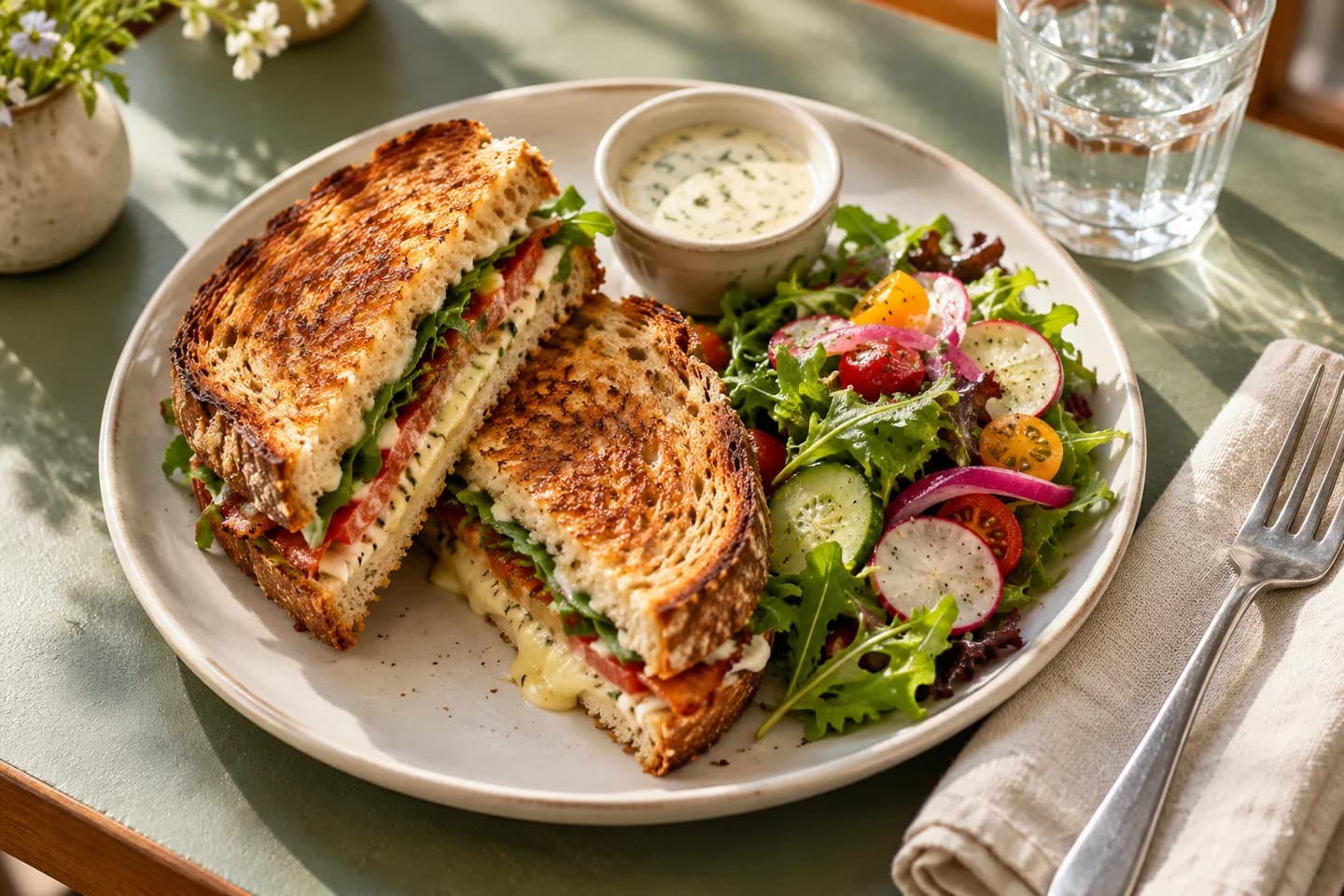
A picture helps preserve the portions and visible components: a large mound of rice, a piece of fish, vegetables, a drink and a dip. It is particularly useful if you log the meal later. The photograph, however, cannot reliably tell you the oil absorbed during frying or everything hidden beneath the surface.
You can combine the photo with a short note, for example: 'rice bowl with grilled chicken, creamy sauce, shared fries.' This gives an AI-assisted tracker additional context without pretending you know gram weights.
Decide what 'a portion' refers to
The NIDDK distinguishes a portion—the amount you choose to eat—from a serving defined in a label or other reference. Restaurant portions need not match a standard serving. Two people ordering the same entrée may also eat different amounts.
If you shared a platter, record only your approximate share. If you saved part for later, log that part when you actually eat it. A transparent estimate such as 'about half the entrée' can be more useful than confidently selecting a portion unit that does not fit your meal.
What to do when the menu lists no calories
Break the meal into components you can reasonably recognize. Use suitably described generic entries for items such as cooked rice, fish or roasted vegetables. Add sauces and drinks separately where you can, while admitting uncertainty about cooking fats and portion sizes.
This is a fallback estimate, not an official nutritional fact about the establishment. Resist copying an unrelated chain restaurant's value simply because the dish has the same name; ingredients and preparation can differ.
An everyday example: the café sandwich
Imagine you order a toasted sandwich with turkey, cheese and a side salad. You can identify bread and filling, note whether mayonnaise was included, and check whether the dressing came separately. If the café supplies a standard-item calorie listing, use it for the part it covers; otherwise log the visible components and describe the uncertain extras.
Be realistic about the outcome. For casual self-monitoring, a meal log with known and unknown ingredients separated may be enough. If nutrition tracking is part of treating a medical condition, follow your care team's instructions rather than relying on a photo-derived guess.
Sources and further reading
- FDA — Menu Labeling Requirements
- FDA — Calories on the Menu
- NIDDK — Food Portions: Choosing Just Enough for You
- USDA FoodData Central — Nutrient Data
General information, not individual medical or nutritional advice. Verify product labels, serving sizes and professional guidance when appropriate.