
Tracking methods
Photo vs. Manual Calorie Tracking: When Each Method Works Better
A food photo and a manual entry solve different logging problems. Compare their tradeoffs for mixed meals, packages, recipes and daily routines.
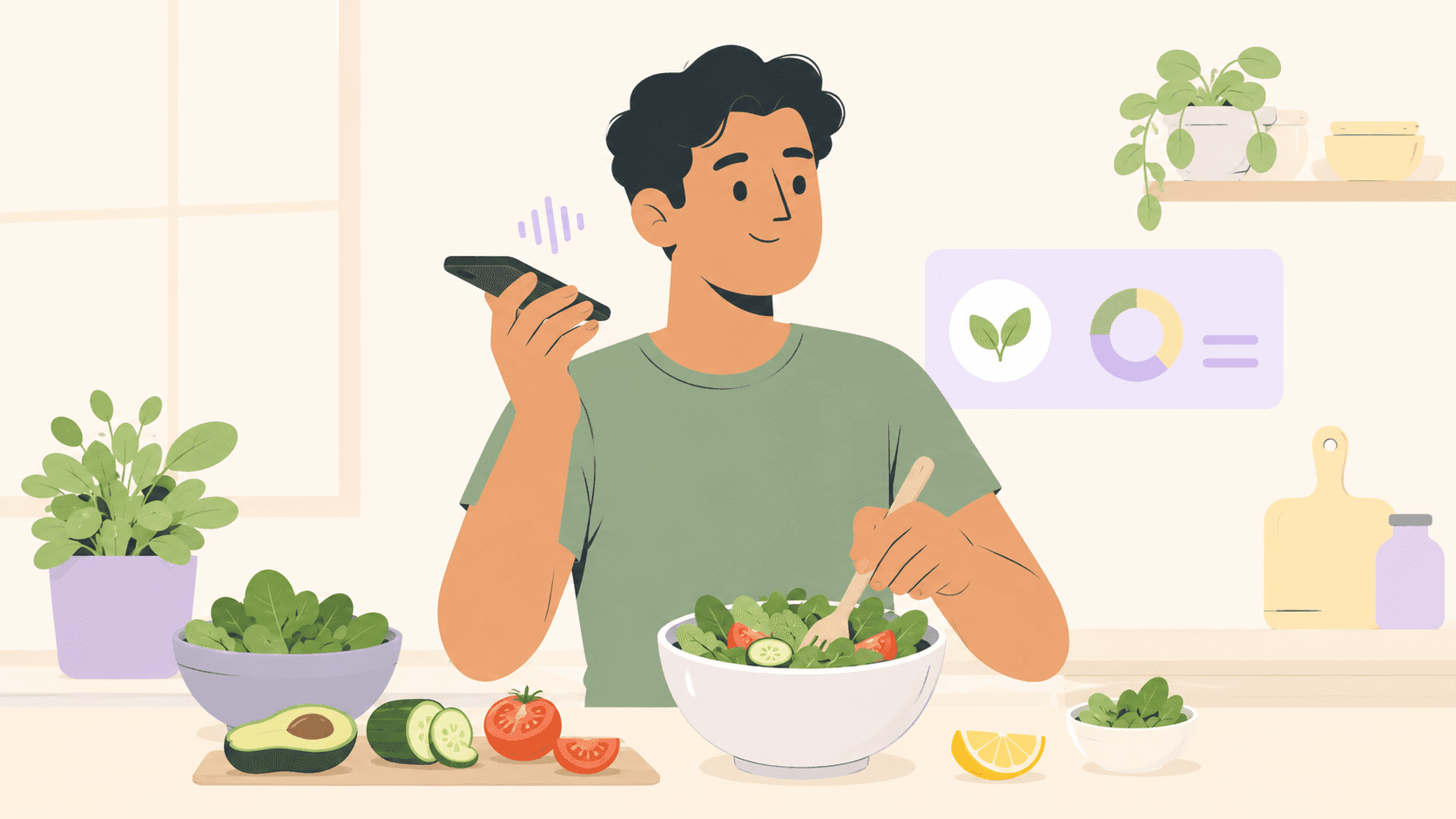
A meal arrives at your table. You can photograph it in a few seconds, or search a food database and enter the ingredients by hand. Which method gives the better log?
Neither method wins in every situation. A photo helps capture what is visible and reduces the effort of describing a meal from memory. Manual input helps when you already know the ingredient amounts, recipe or label. The strongest approach is often to combine them.
What photo-based logging is good at
A picture preserves the appearance of your meal: the side dishes, visible ingredients, approximate size and items you might forget to mention later. It can serve as a convenient first step for an unfamiliar combination, such as a café plate with several separate foods.
A photo alone does not tell the whole story. Food underneath a topping can be hidden; the amount of cooking oil or sugar in a sauce may be unknown. The camera does not necessarily reveal a reliable weight or serving count. Good lighting and a clear frame help identify what is visible, not invisible ingredients.
What manual food entry is good at
If you have a package label, measured ingredient weights or a recipe, you may know facts the camera cannot infer. Manual logging lets you choose a specific food record, preparation and quantity rather than relying on visual recognition. It works particularly well for meals you repeat or cook yourself.
The tradeoff is effort. Searching a long list of similar foods can be tedious, and selecting the wrong database entry can produce a misleading result despite careful typing. Manual does not automatically mean accurate; entry quality still depends on the selected record and portion.
What published photo research does and does not show
Research on portion-estimation aids is more nuanced than the claim that a photo is always better. In one study, 40 participants recalled a lunch using either text-based portion descriptions or reference images. Text-based descriptions performed better on the study's agreement measures, although both methods showed error. The experiment evaluated portion-description tools, not BiteCheck's AI or any other commercial food-recognition app.
The Nutris-Phone study compared photo-based records assessed by a trained nutrition scientist with weighed records from 66 adult volunteers. The authors found the method feasible but reported systematic bias as intake increased. This was a dietary assessment workflow with human analysis, not a test of automatic AI recognition or proof that a photo app outperforms manual logging.
Choose your method based on the meal
For a packaged snack, start with its Nutrition Facts label and the serving you actually ate. For a homemade casserole, begin with the recipe and the portion you served. For a restaurant plate with uncertain ingredients, a photo provides a useful visual record, while menu information or a short note may add needed context.
For an everyday breakfast you eat repeatedly, saving a familiar entry can reduce the need to scan or search again. For a meal that changes each time, a photo plus a short ingredient correction may be more useful. This is a practical workflow recommendation, not a controlled speed or accuracy comparison.
How to combine photo, voice and text
Take the picture before eating if that fits your routine. Review the predicted foods. Correct any missed side dish and add a brief note such as 'with a tablespoon of peanut butter' or 'shared the fries.' If you know a packaged ingredient's precise serving, replace the guess with that information.
BiteCheck supports photo, voice, text and chat-based food logging. You can choose the lowest-effort input for a meal, then check whether the result matches what you know. The point is not to make a food estimate magically exact; it is to leave fewer important assumptions unexamined.
Make the decision sustainable, not absolute
A consistent, reasonably described meal log may be more valuable for everyday reflection than a complicated process you never want to repeat. Choose a level of detail you can maintain without stress. If recording intake becomes distressing, consider stepping back and speaking with an appropriate professional.
The useful question is not 'Which feature is the best?' but 'Which information is available for this food, and how can I enter it without guessing?' Sometimes the answer is a photo; sometimes it is a label; often it is both.
Sources and further reading
- Lucassen et al. (2021) — The accuracy of portion size estimation using food images and textual descriptions
- Prinz et al. — Feasibility and relative validity of a digital photo-based dietary assessment: Nutris-Phone study
- FDA — Serving Size on the Nutrition Facts Label
General information, not individual medical or nutritional advice. Verify product labels, serving sizes and professional guidance when appropriate.